
 Ichthyophthirius
multifiliis
Ichthyophthirius
multifiliis
Ichthyophthirius multifiliis or the equivalent marine form Cryptocaryon irritans can cause significant losses of cultured tilapia, especially if fish are raised under crowded conditions. The optimum temperature for "ich" is between 20 and 25'C. Young tilapia are particularly susceptible to infection by this protozoan ectoparasite.
There are three stages in the life cycle of ich. These are the adult stage or trophont, a cyst stage where asexual multiplication of the parasite occurs and the tomite stage which is the infective form of the parasite. The trophont stage is embedded in the skin of the host fish. The trophont stage causes damage to the fish, the extent of which is related to the number of trophonts present (e.g. the more present, the more damage is done). In particular, the abundance of these parasites on the gills causes the greatest threat to survival of the host. Trophonts are covered with short cilia and while on the host move between the layers of the skin and feed on cells of this tissue. These trophonts increase in size and can be recognized as the þwhite spotsþ that are characteristic for fish heavily infected by ich. Once mature, trophonts drop off of the fish; fall to the bottom of the container as a cyst stage and multiple to form 500 to 1000 tiny, motile tomites, the infective stage of the parasite. After three days the cysts rupture releasing the tomites. Tomites must contact a host fish within three days or the organisms will perish. When a tomite makes contact with a fish, it burrows into the skin and grows to form the adult or trophont stage.
Tilapia infected with ich scrape on the bottom of the container (e.g. "flash") and have forced and increased rate of breathing. Small 1 mm sized white spots will be visible on the skin of the affected fish. As the infection progresses the number of these white spots dramatically increases often abruptly due to release of massive numbers of tomites from cysts.
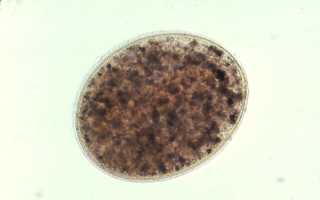
Ichthyophthirius multifiliis or Ich is a large ciliated protozoan with a distinctive comma shaped nucleus. Usually, on wet-mounts these organisms will vary in size from 0.02 mm to nearly 1 mm. These different sizes reflect younger to older parasites. The cilia along the perimeter of the organism beats and slowly propels the protozoan forward. Under transmitted light in wet-mount preparations, Ich appears brownish in color.
Prevention of ich is by blocking entry of the parasite into cultured tilapia populations. This is particularly important if the fish are being raised at high density. Elevated temperature (e.g. ò 30øC) will inhibit ich, thus increasing the temperature for a week or more can prevent the organism from multiplying rapidly.
Because the cyst stage is formed, the infection cycle of ich can be broken by transferring fish in an infected group to a new clean container every third day for four or more transfers. In this schedule, the fish are essentially moved away from the exposure to new batches of infective tomites. Once fish are removed the container should be disinfected with chlorine and completely scrubbed and cleaned before new fish are added to the tank.
Ich infections can also be treated in formalin and malachite green baths (see treatment module of this program for more information). Two points should be made about chemical control. The first is that these treatments have not been approved by the FDA for use with tilapia intended for human consumption. The second point is that the chemicals affect the swimming, infective stage (tomite), but have little effect on the trophonts embedded in the skin of the host. Thus, chemical treatments will slow down or eliminate re-infection, but do little to affect the parasites that have already invaded the skin of the host.
See also:
"My fish have had this before due to contamination. I put them in a quarantine ( My opinion is to not circulate this water through your system) tank and added salt (Sodium Chloride this can be found in the grocery store as canning salt or ice cream salt) all other salts have anti caking agents, iodine and other stuff you do not want to expose your fish too) to the water until it reached 3ppt. The breakdown on the formula is 2.75 teaspoons per gallon or 5.75 cups per 100 gallons. I would do partial water changes daily to keep your ammonia levels low and re add salt as necessary ie. put back what you removed in the water change. This should go on for 6 days to ensure you kill the ich during one of two stages in its cycle. To understand the cycle is how to kill it off. When a fish gets ich, it burrows under the skin and is protected by the fishes mucus layer and the salt will not effect it. It remains under the skin for 4 days while it feeds off your fish. during this time your fish will be trying to scratch them off by turning sidways and rubbing there sides (this is the tell tale sign your fish have ICH). After 4 days the casing the ich has been living in under the skin will rupture and they will fall to the bottom of the tank and go through phase two. As they drop from fish to the bottom of the tank is the first time you can kill them because they are exposed (short fall from fish to bottom of tank) When they fall to the bottom of the tank they will encase for a second time for approximately 24 hrs. At this stage they are multiplying and when the case ruptures they swarm (second and last chance during this life cycle to kill them) and the process begins again. Six days of salt bath will clear all infected fish if done properly. The picture you have provided does not appear to be ich in my opinion but with this information you will be able to treat your fish if it was the case. I have treated mine before with 100% success using this method." +
| file: /Techref/other/pond/tilapia/ich.htm, 9KB, , updated: 2021/3/30 11:35, local time: 2025/9/2 18:33,
216.73.216.127,10-1-125-164:LOG IN
|
| ©2025 These pages are served without commercial sponsorship. (No popup ads, etc...).Bandwidth abuse increases hosting cost forcing sponsorship or shutdown. This server aggressively defends against automated copying for any reason including offline viewing, duplication, etc... Please respect this requirement and DO NOT RIP THIS SITE. Questions? <A HREF="http://www.ecomorder.com/techref/other/pond/tilapia/ich.htm"> Tilapia Topic: Disease Vectors</A> |
| Did you find what you needed? |
Welcome to ecomorder.com! |
Welcome to www.ecomorder.com! |
.